
Property Operations
Receivership and Bankruptcy: A Milwaukee Rental Portfolio Handoff Guide
When receivership, foreclosure, municipal enforcement, and Chapter 11 overlap, a portfolio headline is not parcel-level authorization. Use a control register, verify occupancy, assign one work-order owner, and document every handoff before late-summer work becomes winter-service planning.
A distressed portfolio can have more than one chain of authority
A receiver appointment, foreclosure action, municipal enforcement case, and Chapter 11 filing do not, by themselves, establish one operator for every affiliated parcel. In the Highgrove matters, that is an operational inference from the different entities, parcel counts, proceedings, and effective dates in the source record, not a legal conclusion about any specific order.
Sources reviewed through August 26, 2026 included a City complaint concerning 51 RPR Series D1 properties, a lender-case receiver decision reported to concern 86 properties, and a July 29 Chapter 11 filing by Highgrove Holdings Management, LLC. The proceedings may overlap without covering identical properties or conferring identical authority. Later filings may change that picture.
For an institutional owner or successor operator, a portfolio headline is not parcel-specific authorization. Before dispatching a crew, directing tenant communications, approving a scope change, or paying an invoice, document the authority that applies to the address.
What the Milwaukee record establishes—and what it does not
The City of Milwaukee's March 26, 2026 complaint identified 51 properties owned by RPR Series D1. The City alleged code noncompliance, unresolved tenant concerns, vacancy or abandonment, deficient management, unpaid municipal judgments, and more than $245,000 in delinquent taxes, special charges, interest, and penalties as of March 13, 2026. The City requested remedies that included appointment of a receiver. These are allegations in a civil complaint, not adjudicated findings on every property condition or parcel. Read the complaint.
Separately, WUWM reported on June 10, 2026 that a Milwaukee County judge ruled that the 86 properties involved in the U.S. Bank lawsuit should be placed with a receiver after Highgrove missed another payment deadline. That reported decision concerned the lender case. Do not treat it as proof of control over every Highgrove-affiliated property without reviewing the applicable order and parcel schedule. Read WUWM's reporting.
Highgrove Holdings Management, LLC filed a voluntary Chapter 11 case in the Eastern District of Wisconsin on July 29, 2026. The available docket record reviewed August 26 identified the company as debtor in possession and recorded joint-administration procedures involving related cases. Those details remain subject to later filings and orders. See the case record.
The operational conclusion is an inference, not a legal conclusion: a later order, filing, or written appointment may change who can authorize work, receive reports, or direct access. Check the current controlling documents before acting.
Start with a parcel-control register
A portfolio spreadsheet is not enough during a contested or changing transition. Build a control register that answers one operating question: who is documented as authorized to direct work at this address on this date?
For each parcel, record:
- Tax key and normalized street address
- Titled owner and managing entity
- Relevant court, case number, and proceeding type
- Receiver, debtor in possession, manager, lender representative, or other designated contact
- Written authority document and its effective date
- Occupancy classification and date of last confirmation
- Approved work requestor and invoice recipient
- Emergency escalation contact
- Tenant-access rules, known hazards, and active-work constraints
Keep the supporting document with the parcel record. A verbal instruction may help triage an urgent condition, but operators should not treat it as a sufficient basis for recurring work when control is contested or changing.
Confirm occupancy before assigning exterior work
Treat occupied, vacant, uncertain-status, and active-rehabilitation properties as separate operating classes.
For occupied homes, establish the communication path before scheduling work. Gates may be locked, pets may be present, vehicles may limit access, and residents may mistake a crew visit for an inspection or repair appointment. The authorized manager should define tenant notice and access expectations.
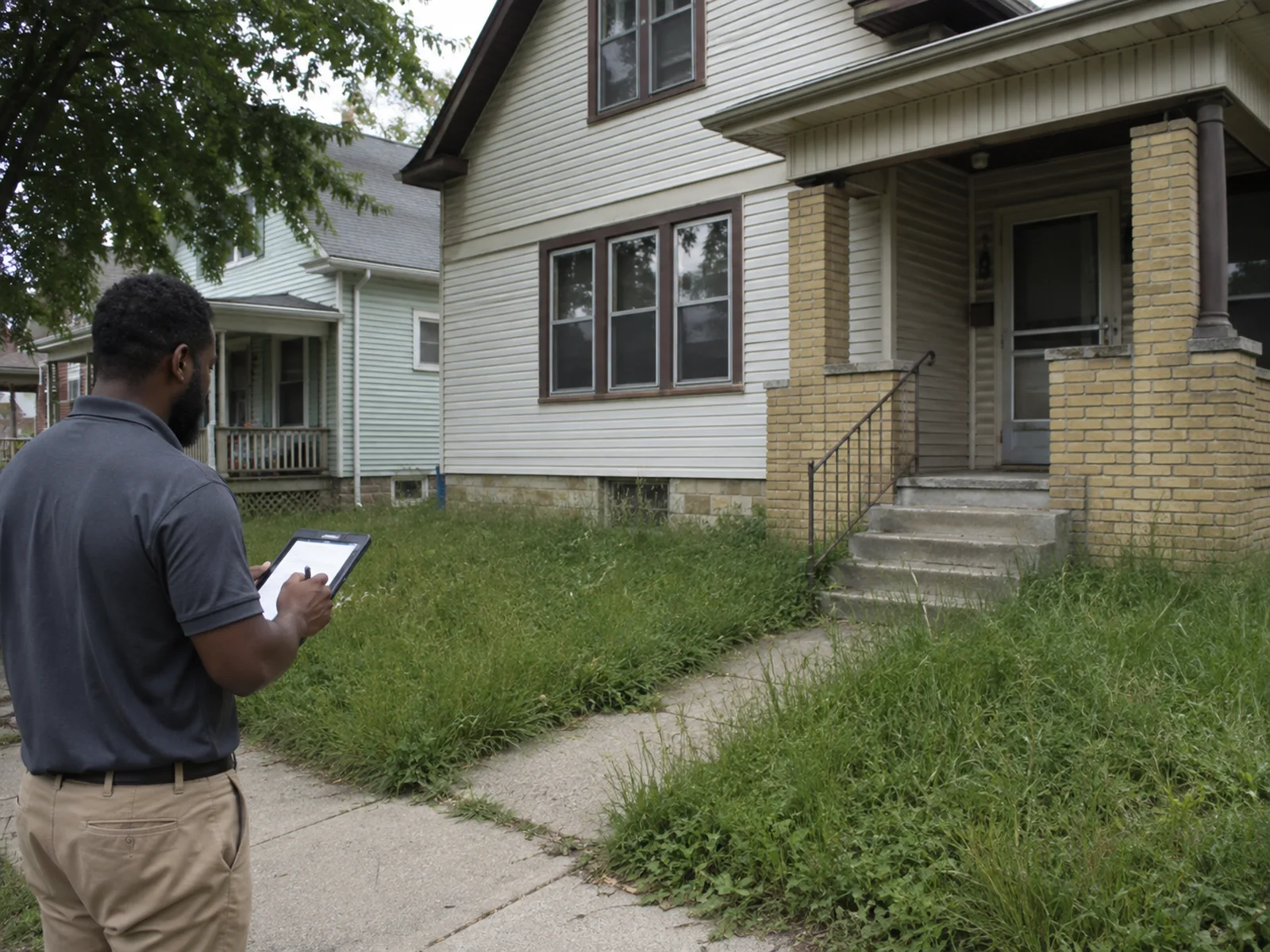
For confirmed vacancies, create a dated exterior condition record before work begins. Note overgrowth, debris, blocked walkways, visible unsecured openings, and weather exposure. Do not treat an exterior observation or maintenance assignment as authorization to enter the building.
For uncertain-status homes, hold nonemergency work until the authorized party confirms occupancy and access rules. The operating preference is to accept a delayed routine visit rather than risk an unauthorized entry, duplicate dispatch, or confusing tenant contact.
Assign one work-order owner
Each active parcel should have one documented party responsible for issuing work orders. Depending on the property and current controlling documents, that party might be a receiver, debtor in possession, property manager, or authorized asset-management contact.
A usable work order identifies:
- The parcel and authorizing party
- Scope and service window
- Spending limit, if one is provided
- Whether the work is emergency stabilization or routine maintenance
- Required photos and completion notes
- The recipient for completion records and invoices
- The escalation path if site conditions differ from the approved scope
Hold routine work when two parties give conflicting instructions or authority is unclear. For a safety issue, follow the documented emergency protocol and preserve the instruction, observed condition, and completion record.
Build a handoff record that survives the next change
A successor manager, receiver, lender, or court-appointed professional should be able to understand the property's documented condition without reconstructing it from scattered emails and invoices.
For each completed visit, retain date-stamped photos, parcel identifiers, crew notes, visible hazards, weather conditions when relevant, scope exceptions, and the approval tied to the work. Photograph conditions before and after service, but describe only what the crew observed. Do not assign legal responsibility or infer occupancy without confirmation.
This documentation does not resolve a receivership, bankruptcy, ownership, or liability dispute. It gives the next authorized operator a cleaner operational record if control changes again.
Use late summer to prepare for winter control gaps
Late summer can provide a planning window to establish an exterior-condition baseline before Milwaukee winter-service decisions begin. Where authority is confirmed, priorities may include mowing and edging, weed cleanup, shrub clearance, yard cleanup, access-path visibility, and condition documentation.
A short stabilization effort may improve site visibility and help a successor operator plan snow clearing and deicing. It cannot substitute for parcel-specific authorization or determine who will control the property after a later filing.
Revalidate the control register after material court orders, bankruptcy filings, receiver notices, or management-transition communications. In a distressed portfolio, the effective date of a handoff matters as much as the name of the new contact.
Transition checklist for owners and asset managers
Before assigning recurring exterior work, confirm that the team has:
- Reconciled the parcel roster against current authority documents.
- Confirmed occupancy status and recorded the confirmation date.
- Documented existing exterior conditions.
- Assigned one work-order owner and invoice recipient.
- Defined emergency authority separately from routine-maintenance approval.
- Established tenant communication and access rules for occupied homes.
- Required parcel-specific photos and completion notes.
- Set a process to suspend or redirect work when authority changes.
Prepare an authorized exterior-maintenance handoff
Provide the authorized exterior-maintenance vendor with a reconciled parcel roster, current approving contacts, scope priorities, occupancy and access constraints, and reporting requirements.
That structure helps work follow the documented operational handoff instead of an outdated portfolio assumption. Reconfirm authorization if a material filing or written notice arrives after a work order is issued but before service begins.
Put perspective to work.
Discuss your priorities and budget. Build a plan around the support your team needs.
Explore consulting options