
Property Operations
When Is a Milwaukee Vacant Lot Actually Complete?
Milwaukee records from June and August 2026 show why “mowed” and “complete” are not the same status. Use service zones, condition fields, evidence, exception codes, and named owners to close vacant-lot visits consistently.
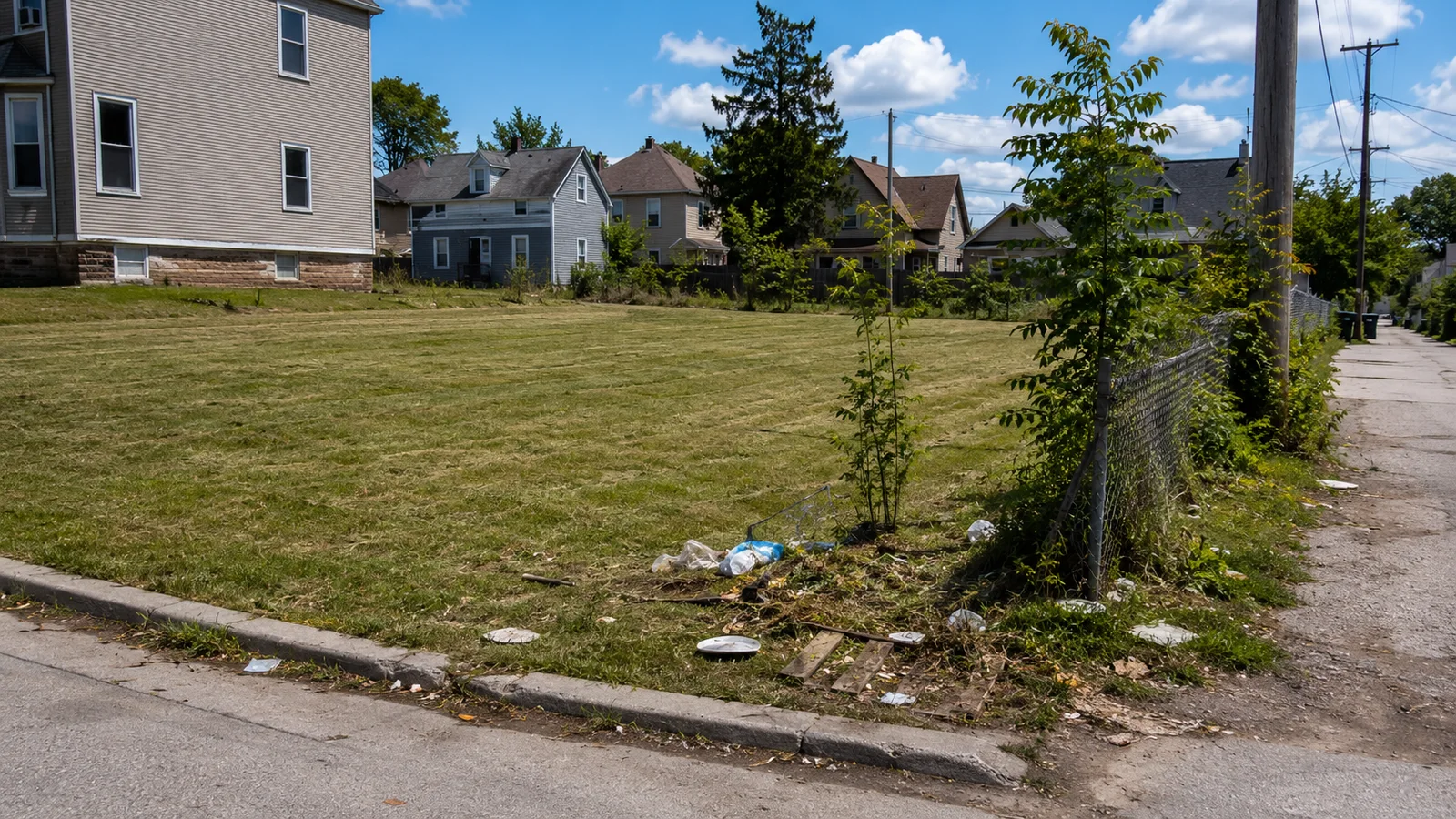
When Is a Vacant Lot Actually Complete?
A crew cuts the grass. Litter remains near the alley. Saplings still stand along a fence. The closeout photos show the mower’s path but not the whole parcel.
Is the visit complete?
Milwaukee’s 2026 public record illustrates why portfolio operators should not let the word “maintained” serve as the entire closeout standard. At a June 3 Anti-Illegal Dumping Policy and Research Committee meeting, neighborhood stakeholders described city lots where contractors reportedly cut grass but left trash or saplings despite stated requirements. The committee also discussed contractor visibility, accountability, and gaps in information shared across departments.
Those were stakeholder complaints recorded in meeting minutes, not an audit finding that every contractor or every lot failed. They still identify a practical portfolio risk: a task can be complete while the property remains unresolved under the broader scope.
What the Milwaukee Record Shows
The June 3 minutes describe responsibilities divided among several city functions. The Department of Public Works generally handles dumping in the public right-of-way or parkways. The Department of Neighborhood Services issues orders for dumping on private property. The Department of City Development provides information on certain cleanups performed by its contractors. Forestry manages grass cutting and snow shoveling on vacant lots through district-based contractors.
Different conditions may require different authority, equipment, and funding. An operating risk appears at the handoff. One party can finish its assigned work while a condition remains unresolved and no one has a clearly documented next step.
The committee requested follow-up on Forestry bidding and contractor accountability. Participants also discussed making the contractor assigned to a specific lot easier to identify. The minutes note difficulty compiling data across departmental systems and interest in a shared record using unique identifiers, GIS mapping, and photographs.
The April 13, 2026 version of Milwaukee’s 2026 Buying Plan lists “City Property Maintenance - Mowing & Snow/Ice Removal” as a DPW Forestry procurement category. It lists an estimated value of $300,000 and an expected period of Q1-Q4 2026. The plan may be revised and does not establish a particular contractor’s assignment, current scope, or performance.
A Finished Task Is Not Always a Finished Visit
“Mowed” is a task status. “Complete” should be a parcel-level decision against the agreed scope.
That distinction matters when a visit may involve:
- Grass and weeds in the mowable area
- Edges, sidewalk strips, or alley frontage
- Routine loose litter
- Bulk dumping requiring separate equipment
- Saplings or dense woody growth
- Blocked or unsafe access
- Snow or ice on defined walking surfaces
- Conditions requiring municipal notice or owner approval
If a work order says only “maintain lot,” the crew, dispatcher, manager, and owner may each apply a different definition. The crew may see a completed mowing task. The manager may see an incomplete cleanup. The owner may see an unresolved condition that could lead to a complaint, another mobilization, or a fee dispute.
In that scenario, the field work may satisfy its narrow assignment while an undefined handoff leaves the broader condition open.
Replace “Maintained” With a Completion Matrix
A portfolio-wide completion matrix can turn closeout into a record another person can review. This is an operating recommendation, not a Milwaukee requirement.
| Completion field | What the record should establish | |---|---| | Parcel ID | The exact lot or managed property serviced | | Service zones | Included areas, such as interior, frontage, alley edge, or sidewalk | | Mowing status | Whether all accessible mowable areas were cut | | Litter status | Whether litter was absent, removed, or left under a documented exception | | Woody growth | Whether saplings and brush were removed, excluded, or escalated | | Access status | Whether fences, vehicles, debris, or safety concerns blocked work | | Evidence | Before-and-after views tied to the parcel and visit | | Exception code | A consistent reason for any unfinished condition | | Next action | The specific work, review, or approval still needed | | Escalation owner | The person or organization responsible for that action | | Due date | When the next decision or visit is due |
The matrix needs to match the actual contract. If litter removal or sapling cutting is excluded, say so. If it is included only below an adopted threshold, put that threshold in the scope instead of asking crews to improvise in the field.
Define Exceptions Before Dispatch
Not every condition belongs in a routine mowing visit. Including every site problem in one base price may create safety, disposal, and scheduling issues. Excluding every adjacent condition may leave a parcel technically mowed but visibly unresolved.
A useful scope defines what the crew does when it encounters common exceptions.
Bulk dumping
State whether the crew removes it, photographs it, estimates volume, or creates a separate work order. Identify who can authorize added work.
Hazardous or unknown material
Specify whether the crew stops work, documents the condition, and notifies a named contact. Do not leave potentially specialized handling to individual field judgment.
Saplings and woody growth
Define what routine service includes. The rule might use stem size, density, equipment needs, or an approved site plan. The right threshold is a management decision; it should not be inferred from “mowing.”
Blocked or unsafe access
Require a parcel-linked photo and an exception code. Set a notice deadline. State whether the crew should complete the accessible portion of the service zone.
Boundary uncertainty
Provide a parcel map or marked service zones. Crews should not have to infer the line between managed land, public frontage, and a neighboring parcel.
Weather-related conditions
For snow and ice work, define serviced surfaces, trigger conditions, closeout evidence, and return conditions in the applicable agreement. “Visited” does not establish that every contracted surface was completed.
Make the Evidence Reviewable
Evidence helps only when the next reviewer can connect it to the right parcel, service zone, and visit.
A practical photo set may include:
- An arrival view showing the general parcel condition
- Completed views covering each contracted service zone
- Closeups of any exception or obstruction
- A final wide view showing the condition at departure
The record should also identify the service date, parcel, crew or vendor, exception code, and reviewer. Geolocation may help where an organization’s tools and policies support it. A clear parcel identifier and recognizable site context can also make the record usable.
Documentation may become important when a charge or condition is disputed. The Milwaukee Administrative Review Board of Appeals record for August 14, 2026 included appeals involving tall-grass-and-weeds fees and snow-and-ice-removal fees. In a garbage-and-litter appeal, the minutes also state that the appellant had not seen the department pictures in the file.
Those appeals do not establish that a department, contractor, or appellant was correct. They confirm that property owners were actively contesting nuisance fees tied to exterior conditions on August 14, 2026.
Use One Status Taxonomy Across the Portfolio
Free-form closeout labels can produce inconsistent decisions. A vendor’s “done” can become a manager’s “needs cleanup” and an owner’s “open complaint.”
A shared status set can separate completed work from unresolved conditions:
- Complete: Every included task and service zone meets the adopted closeout standard.
- Complete with documented exception: Included work is finished, but a recorded condition outside the base scope remains.
- Awaiting approval: Additional work has been identified, but no authorized decision has been recorded.
- Return required: An included task remains unfinished and requires another visit.
- Unable to access: The crew could not safely reach the defined service area.
- Out of scope: The condition is excluded under the agreement and assigned to a named next owner.
“Complete with documented exception” should not become a catchall. Use it only when the record includes evidence, a reason, the next action, and an accountable owner.
Write Scope Language That Survives the Handoff
A repeatable grounds scope should answer seven questions:
- Where does the work apply? Identify parcels and service zones.
- What tasks are included? Separate mowing, trimming, litter collection, woody-growth removal, and seasonal work.
- What is excluded? Name conditions requiring separate equipment, authorization, or specialist handling.
- What proves completion? Specify required records and photo views.
- When must exceptions be reported? Set a response window that fits the operating schedule.
- Who owns the next decision? Name a role rather than relying on a general inbox.
- How are rework and disputes handled? Define review steps and preserve a change-order path for work outside the base visit.
This structure can also improve vendor comparison. Instead of comparing several interpretations of “lot maintenance,” a portfolio can compare pricing against the same zones, tasks, exceptions, and evidence requirements.
The Portfolio Manager’s Closeout Test
Before closing a visit, ask whether a new manager, vendor, or owner could open the record and determine:
- What was serviced
- Which zones were completed
- What remains
- Why it remains
- Who owns the next step
- When that step is due
If the record cannot answer those questions, the grass may be cut, but the visit is not operationally complete.
Milwaukee’s 2026 records do not prove a universal contractor problem. They support a narrower operating lesson: when contractors, departments, neighbors, and owners use different definitions of completion, the handoff can become part of the work. A measurable scope, shared status system, and named escalation owner can give every party the same finish line.
Ask Jane about this article.
Connect the article to GroundHaven consulting or current market evidence.
Continue with JanePut perspective to work.
Discuss your priorities and budget. Build a plan around the support your team needs.
Explore consulting options